Most businesses that eventually go through financial restructuring did not arrive there suddenly. The signs appeared months or years earlier: a cash flow that was always tighter than the profit suggested, debt that was manageable until it was not, a working capital cycle that required more borrowing each quarter to sustain the same revenue. The decision to act on those signs early is what separates a controlled restructuring from a crisis that leaves fewer options and worse outcomes.
Financial restructuring is not a last resort. It is a set of tools applied to a business whose current financial structure is not aligned with its operational reality, its debt obligations, or its growth trajectory. Applied early, those tools preserve value and options. Applied late, they are managing damage.
Financial restructuring covers any significant change to a business’s capital structure, debt obligations, or financial operations designed to improve its ability to meet its obligations and operate sustainably.
The three broad types of restructuring are:
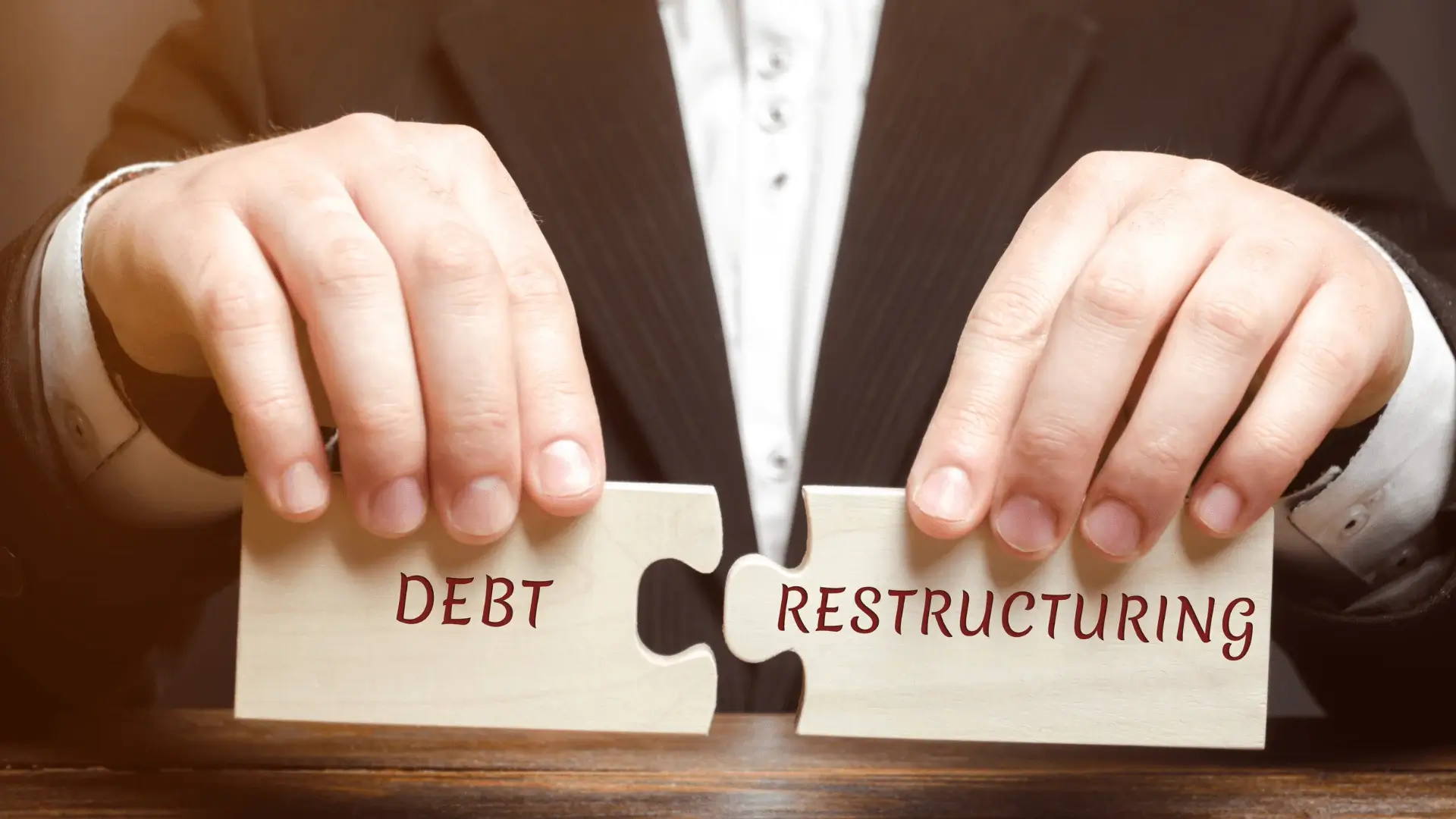
Debt restructuring: Renegotiating the terms of existing debt obligations, including repayment schedules, interest rates, and security arrangements, with lenders. This can include converting short-term debt to longer-term facilities, negotiating payment holidays, or consolidating multiple debt facilities into a single arrangement at more manageable terms.
Operational restructuring: Changes to the business’s cost structure, revenue mix, or operational model designed to improve cash generation. This includes identifying and closing loss-making business units, renegotiating supplier terms, and redesigning the working capital cycle to reduce the cash tied up in receivables and inventory.
Corporate restructuring: Changes to the legal and ownership structure of the business, including separation of business units, merger with or acquisition of other entities, and changes to the shareholding structure that affect how capital is allocated across the group.
In practice, most restructuring engagements involve elements of all three. A business with a debt problem usually also has an operational problem that contributed to it, and addressing the debt without addressing the operations produces a temporary fix rather than a durable solution.
A business that reports profit on paper but consistently runs short of cash is experiencing a structural problem in its working capital cycle. Receivables that are collected slowly, inventory that turns slowly, and payables that are paid faster than cash comes in all create a cash deficit that borrowing is used to fill. When this pattern persists across multiple periods, it signals that the business model’s cash dynamics need structural attention rather than another working capital loan.
When a business takes on new borrowing to make repayments on existing facilities, the debt level is growing faster than the business’s ability to service it. This is one of the clearest signals that the current debt structure is unsustainable and that renegotiation with lenders needs to happen before the situation forces the conversation under worse conditions.
Banks and financial institutions in Nepal respond to covenant breaches, missed interest payments, and deteriorating financial ratios by tightening facility terms, requesting additional collateral, or initiating recovery proceedings. When lender relationships shift from routine to adversarial, the window for constructive restructuring is narrowing. Acting before a formal default places the business in a significantly stronger negotiating position.
Suppliers who reduce credit terms, require advance payment, or refuse to extend further credit to a business are responding to the same financial signals that lenders respond to. When multiple suppliers move simultaneously, it reflects a market perception of the business’s creditworthiness that needs to be addressed structurally rather than managed on a case-by-case basis.
A profitable, growing business that cannot fund its own growth without continuous external borrowing is generating less cash than its growth requires. This is not always a distress signal, but it requires analysis of whether the growth is generating returns that justify the capital cost, and whether the financing structure is appropriate for the business’s growth profile.
When the business owner or management team is spending the majority of their time managing creditor relationships, negotiating payment extensions, and managing cash day to day rather than running the business, the financial structure has become an operational liability. This is frequently the trigger that prompts distressed business owners to seek advisory support
The most immediate tool for a business under debt pressure is direct negotiation with lenders. Nepal’s banking sector has established frameworks for restructuring non-performing or stressed loans, and most banks prefer a negotiated restructuring to the cost and uncertainty of recovery proceedings.
A restructuring advisor brings the financial analysis that makes the negotiation credible: a cash flow model demonstrating the business’s capacity to service restructured debt, a clear articulation of what terms are required for the business to be viable, and the professional standing to engage with bank credit committees on equal terms.
Improving the cash conversion cycle reduces the business’s dependence on borrowing to fund day-to-day operations. Specific measures include tightening receivables collection, renegotiating extended payment terms with suppliers, and reducing inventory to the minimum required for operational continuity.
These measures generate cash internally without requiring additional debt, which reduces the business’s total borrowing requirement and improves its debt service capacity.
A detailed review of the cost structure identifies expenditure that can be reduced or eliminated without impairing the business’s core revenue-generating capability. This includes reviewing supplier contracts, staffing structures, lease arrangements, and operational overheads that have accumulated during periods of growth without regular review.
Cost restructuring is most effective when it is guided by financial analysis rather than across-the-board reduction, which frequently cuts into revenue-generating capacity alongside overhead.
Businesses under financial pressure frequently hold assets, property, equipment, or investments that are not essential to core operations and that can be sold or refinanced to generate cash. Identifying and monetizing these assets provides immediate liquidity and reduces the debt pressure without requiring lender negotiation.
A structured restructuring process follows a defined sequence regardless of the specific tools applied.
A comprehensive assessment of the business’s current financial position, including cash flow, debt obligations, working capital cycle, and the specific triggers that created the current situation.
Identifying all creditors, their positions, their likely responses to restructuring proposals, and the sequencing of engagement that produces the best outcome.
A detailed financial model demonstrating the business’s viability under restructured conditions, with specific proposals for each creditor group.
Structured engagement with lenders and creditors against the restructuring plan, with professional representation that maintains the business’s negotiating position throughout.
Executing the agreed restructuring terms, including any operational changes required to deliver the financial performance the restructuring plan is based on.
Ongoing financial monitoring against the restructuring plan to confirm the business is performing as projected and to identify any deviations that require early intervention
The single most important factor in a restructuring outcome is timing. A business that approaches its lenders proactively, with a credible restructuring plan and professional advisory support, negotiates from a position of relative strength. The lender has a viable alternative to recovery proceedings and an incentive to agree to terms that work for both parties.
A business that waits until it has missed payments, exhausted its facilities, and lost supplier support negotiates from a position of weakness. The options available are fewer, the terms achievable are worse, and the outcome for the business’s owners is significantly worse than an earlier intervention would have produced.
The question is not whether the restructuring will happen. For a business with a structural financial problem, it will. The question is whether it happens on terms the business controls or on terms the lenders impose.
GP Rajbahak and Co. provides financial restructuring and debt management advisory services in Nepal for businesses at early signs of financial stress through to formal restructuring proceedings. Our Reforms and Restructuring practice covers the full scope of restructuring tools, from debt renegotiation through to corporate restructuring. Contact our team before the situation requires it rather than after.
1. What is financial restructuring?
Financial restructuring is the process of reorganising a business’s debt, cost structure, or capital arrangements to improve its ability to meet its obligations and operate sustainably. It covers debt renegotiation with lenders, operational cost reduction, working capital optimisation, and, where necessary, changes to the legal or ownership structure of the business.
2. What are the signs a business needs financial restructuring?
The clearest signals are cash flow that consistently falls short of reported profit, debt being used to service existing debt, deteriorating relationships with lenders or suppliers, and management time being consumed by financial problem management rather than operations. Any one of these warrants an advisory conversation. Multiple signals occurring simultaneously indicate the situation is urgent.
3. What are the three types of financial restructuring?
Debt restructuring involves renegotiating loan terms with lenders. Operational restructuring addresses the cost structure and cash generation of the business. Corporate restructuring covers changes to the legal and ownership structure. Most restructuring engagements involve elements of all three, since operational problems and debt problems typically occur together.
4. Can a business restructure before it defaults on its loans?
Yes, and proactive restructuring before default consistently produces better outcomes than restructuring under pressure after missed payments. Lenders in Nepal have established frameworks for restructuring stressed facilities and generally prefer a negotiated solution to recovery proceedings. The business’s negotiating position is strongest before a formal default occurs.
5. What does a financial restructuring advisor actually do?
An advisor produces the financial analysis that makes a restructuring proposal credible to lenders, represents the business in creditor negotiations, identifies the operational and structural changes required to make the restructuring sustainable, and monitors performance against the restructuring plan after implementation. The value is in the combination of financial modelling capability, creditor negotiation experience, and the professional standing to engage bank credit committees directly.